
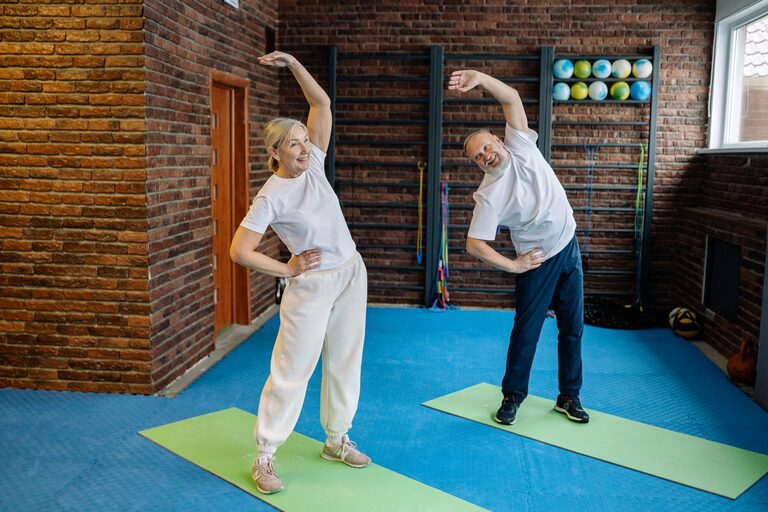
Balance can change over time, but regular practice can help you feel more steady during everyday activities. Simple exercises at home may support better control when walking, turning, reaching, or standing from a chair.
You do not need special equipment to get started. A sturdy chair, a clear area, and a few minutes of practice are often enough. The goal is not to stand perfectly still for a long time. Instead, focus on controlled movements, good posture, and safe progress.
Set Up a Safe Practice Area
Before exercising, prepare your space. Balance work is most useful when you can concentrate without worrying about nearby obstacles.
Use these simple safety steps:
– Choose a flat, well-lit area with plenty of room.
– Place a sturdy chair or countertop nearby for support.
– Keep floors free of rugs, cords, toys, and other trip hazards.
– Wear supportive shoes that fit well.
– Avoid using a lightweight chair, wheeled furniture, or anything that may slide.
– Keep a phone within reach if you are practicing alone.
– Start near a wall or another stable surface.
If you feel unsteady, begin with both hands resting lightly on the chair or counter. As your confidence improves, you can reduce your grip while keeping support close by.
Warm Up First
A short warm-up helps you prepare for movement. Walk slowly around the room for two to three minutes, or march gently in place while holding the back of a sturdy chair.
You can also try:
– Shoulder rolls
– Gentle ankle circles
– Easy knee bends
– Slow side steps
– Reaching both arms forward and overhead
Keep the movements comfortable and controlled. A warm-up should help you feel ready, not tired.
1. Weight Shifts
Weight shifts are a simple way to practice moving your center of balance while keeping both feet on the floor.
How to do them
- Stand behind a sturdy chair with your feet about hip-width apart.
- Hold the chair with both hands if needed.
- Slowly shift your weight toward your right foot.
- Return to the center.
- Shift your weight toward your left foot.
- Continue for 8 to 10 repetitions on each side.
Next, practice moving your weight slightly forward and backward. Keep your feet planted and your upper body tall. Avoid leaning too far.
This exercise can help you become more comfortable with the small adjustments your body makes during standing and walking.
2. Heel to Toe Stand
This exercise narrows your base of support and challenges your steadiness.
How to do it
- Stand beside a wall or sturdy chair.
- Place one foot directly in front of the other, as if standing on a straight line.
- Keep your toes pointing forward.
- Hold the position for 10 to 20 seconds.
- Switch which foot is in front.
Use your fingertips for support, or keep both feet slightly apart if the position feels difficult. Over time, work toward holding the position for longer periods without gripping tightly.
Do not rush this exercise. Small adjustments are normal, and the support should remain close.
3. Heel Raises
Heel raises strengthen the lower legs while also giving you practice controlling your body as you lift and lower.
How to do them
- Stand behind a chair and hold the back lightly.
- Keep your feet hip-width apart.
- Slowly lift both heels until you are standing on the balls of your feet.
- Pause briefly.
- Lower your heels with control.
- Repeat 8 to 12 times.
Try not to bounce or lean forward. Keep your weight spread evenly across the front of both feet. If raising both heels feels easy, practice lifting one heel at a time while keeping the other foot planted.
4. Marching in Place
Marching works on weight transfer and single-leg control. It also resembles an everyday movement pattern.
How to do it
- Stand behind a sturdy chair.
- Hold the chair with one or both hands.
- Lift one knee a few inches.
- Lower the foot slowly.
- Lift the opposite knee.
- Alternate for 10 to 20 repetitions.
Keep your chest lifted and avoid leaning from side to side. Start with small knee lifts. You can gradually lift the knees higher if you remain comfortable and controlled.
For an added challenge, pause for one second each time a foot is lifted. Keep your support nearby.
5. Side Steps
Side steps help you practice moving in a direction that is often overlooked in daily walking.
How to do them
- Stand near a counter or along a clear wall.
- Step to the right with your right foot.
- Bring your left foot next to it.
- Take several slow steps in one direction.
- Repeat in the opposite direction.
Keep your toes facing forward and avoid crossing your feet. Take small steps at first. If you have enough space, complete two or three passes across the room.
6. Sit to Stand
Standing up from a chair is a useful daily movement that combines leg strength, control, and balance.
How to do it
- Sit near the front edge of a firm chair.
- Place your feet under your knees.
- Lean forward slightly while keeping your back comfortable.
- Press through your feet and stand up slowly.
- Pause once you are upright.
- Slowly lower yourself back into the chair.
Use your hands on the armrests only if necessary. Avoid dropping into the seat. Begin with 5 repetitions and rest as needed.
Choose a chair that does not slide. Do not practice from a very low, soft, or unstable seat.
Create a Simple Weekly Routine
You can practice these exercises two to four times per week. A short routine may include:
– Warm-up: 3 minutes
– Weight shifts: 8 repetitions per side
– Heel-to-toe stand: 10 seconds per side
– Heel raises: 8 to 12 repetitions
– Marching in place: 10 repetitions per side
– Side steps: 5 steps in each direction
– Sit to stand: 5 to 8 repetitions
Move slowly and rest between exercises. Quality matters more than completing a large number of repetitions.
Progress Gradually
When an exercise becomes comfortable, make only one small change at a time. You might:
– Use a lighter touch on the chair.
– Hold a position for a few more seconds.
– Add one or two repetitions.
– Take slightly larger side steps.
– Practice with a narrower stance.
Keep a stable support within reach, even when you are improving. Avoid closing your eyes or standing on unstable surfaces at home, as these changes can make the exercise unnecessarily risky.
Listen to Your Body
Stop the session if you feel dizzy, unusually short of breath, faint, confused, or unwell. Also stop if you develop sharp pain or feel that you cannot maintain control. Sit down safely and give yourself time to recover.
If you are new to exercise, have ongoing balance concerns, or are unsure whether these movements are suitable for you, ask a qualified health professional for personalized guidance before starting. A professional can help you choose appropriate exercises and support levels.
With regular, patient practice, these simple movements can become a comfortable part of your home routine. Keep the focus on steady breathing, controlled motion, and safe progress.