
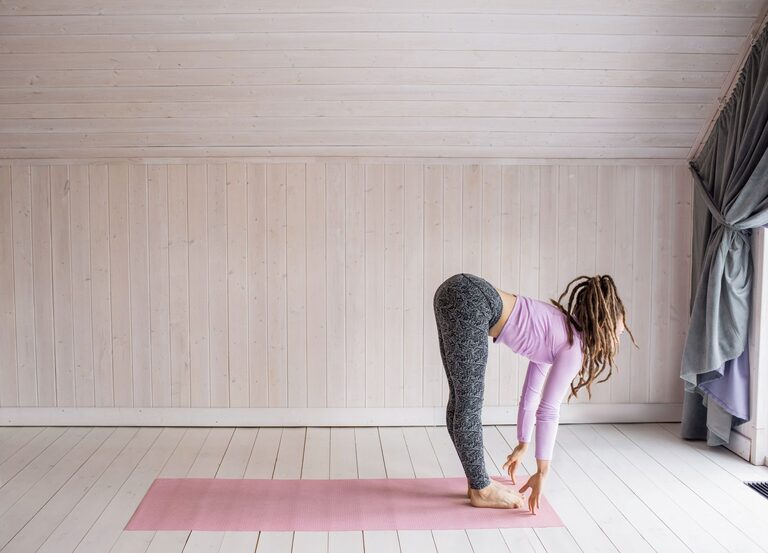
Stretching does not need to be complicated or time-consuming. A few gentle movements can help you feel more comfortable before, during, and after common activities such as sitting at a desk, walking, gardening, or doing household chores.
The key is consistency. Instead of waiting for stiffness to appear, add short stretching breaks to your daily routine. You can stretch in the morning, during a workday, after a walk, or in the evening while winding down.
These simple routines are designed for general daily movement. Move slowly, breathe naturally, and avoid forcing any position. Stretching should create mild, comfortable tension—not sharp pain.
Helpful Stretching Basics
Before you begin, keep a few simple guidelines in mind:
– Move gradually into each stretch.
– Hold each position for about 15 to 30 seconds.
– Breathe slowly and comfortably.
– Keep your movements controlled rather than bouncing.
– Repeat each stretch one or two times per side.
– Use a wall, chair, or countertop for balance if needed.
– Stop if a movement causes pain, numbness, dizziness, or unusual discomfort.
A short routine is often more useful than an occasional long session. Even five minutes can be a practical starting point.
Morning Routine for Gentle Mobility
This routine can help you ease into the day. Perform it beside your bed or in a clear area where you can move comfortably.
1. Reach and Side Stretch
Stand with your feet about hip-width apart. Raise both arms overhead, keeping your shoulders relaxed. Reach gently upward, then lean slightly to the right without twisting forward. Return to the center and lean to the left.
Hold each side for 15 to 20 seconds. Keep both feet planted and avoid forcing the bend.
2. Shoulder Rolls
Let your arms rest by your sides. Slowly roll both shoulders forward, upward, and back in a smooth circle. Complete five to 10 circles, then reverse the direction.
This is an easy way to loosen the upper body after sleeping or before starting a busy morning.
3. Standing Chest Opener
Stand tall and gently bring your hands behind your back. If comfortable, hold one wrist with the opposite hand. Draw your shoulders slightly back while keeping your ribs relaxed.
Hold for 15 to 20 seconds. Do not pull hard or lift your chin.
4. Calf Stretch
Face a wall and place both hands on it. Step one foot back, keeping the heel down and the toes pointed forward. Bend the front knee slightly while keeping the back leg comfortable.
Hold for 20 seconds, then switch sides. This stretch can be useful before a morning walk or after spending time in bed.
Desk Break Routine
Long periods of sitting can make it easy to stay in one position for too long. Try this routine every hour or two, or whenever you notice that your body feels tight.
1. Neck Lengthener
Sit or stand with your back comfortably straight. Let your shoulders drop away from your ears. Slowly turn your head to look over your right shoulder, then return to the center. Repeat on the left.
Next, gently lower your chin toward your chest and return to a neutral position. Keep the range of motion small and comfortable. Avoid rolling your head in large circles.
2. Seated Upper Back Stretch
Sit near the front of a chair with your feet on the floor. Reach both arms forward and gently round your upper back as if you are reaching toward a distant object.
Keep your lower body relaxed. Hold for 15 to 20 seconds, then sit tall again.
3. Wrist and Forearm Stretch
Extend one arm in front of you with the palm facing up. With the other hand, gently guide the fingers downward. Hold briefly, then turn the palm down and gently guide the fingers toward you.
Repeat on the other side. Use light pressure, especially if you spend much of the day typing, writing, or using handheld devices.
4. Seated Hip Shift
Sit with both feet on the floor. Move one foot slightly back and allow your weight to shift forward a little while keeping your back comfortably upright. You should feel a gentle stretch near the front of the hip.
Return to the starting position and switch sides. Keep the movement small and controlled.
Evening Routine for Relaxation
An evening routine can help you slow down after a day of standing, walking, or sitting. Use a mat, carpeted floor, or firm bed for support.
1. Knees to One Side
Lie on your back with your knees bent and feet resting on the floor. Keep your shoulders relaxed as you slowly allow both knees to move a little to the right. Return to the center, then move them to the left.
Only lower your knees as far as you can while keeping the movement comfortable. Repeat several times on each side.
2. Hamstring Stretch
Lie on your back with both knees bent. Raise one leg until the foot points toward the ceiling, or as high as is comfortable. Hold behind the thigh and gently support the leg without pulling.
Keep the other foot on the floor if that feels more stable. Hold for 15 to 30 seconds, then change sides.
3. Gentle Figure Four Stretch
Stay on your back with both knees bent. Place one ankle over the opposite thigh. If comfortable, bring the supporting leg slightly closer to you until you feel a mild stretch around the hip and outer thigh.
Hold briefly, then switch sides. Keep your head and shoulders relaxed.
4. Full-Body Reach
Lie comfortably on your back. Extend your arms overhead and lengthen your legs in the opposite direction, creating a gentle reach through the whole body.
Hold for several breaths, then relax your arms and legs.
How to Build a Consistent Habit
Stretching is easier to maintain when it is connected to something you already do. Try one of these approaches:
– Stretch after brushing your teeth.
– Do a desk routine before lunch.
– Perform calf stretches before a walk.
– Keep a clear space near your favorite chair.
– Set a quiet reminder once or twice during the workday.
– Start with one routine instead of attempting everything at once.
You can also track how you feel before and after stretching. Notice whether certain movements make sitting, walking, reaching, or turning feel easier. This can help you choose the routines that fit your lifestyle best.
Keep It Comfortable
Stretching should be steady, relaxed, and free from competition. You do not need to reach a particular distance or copy someone else’s range of motion. Flexibility develops at different rates, and your comfort level may change from day to day.
If you have an injury, ongoing discomfort, balance concerns, or questions about whether a movement is suitable for you, consider asking a qualified health or fitness professional for personalized guidance. Otherwise, begin with gentle movements, breathe naturally, and focus on making daily activity feel more comfortable one small habit at a time.